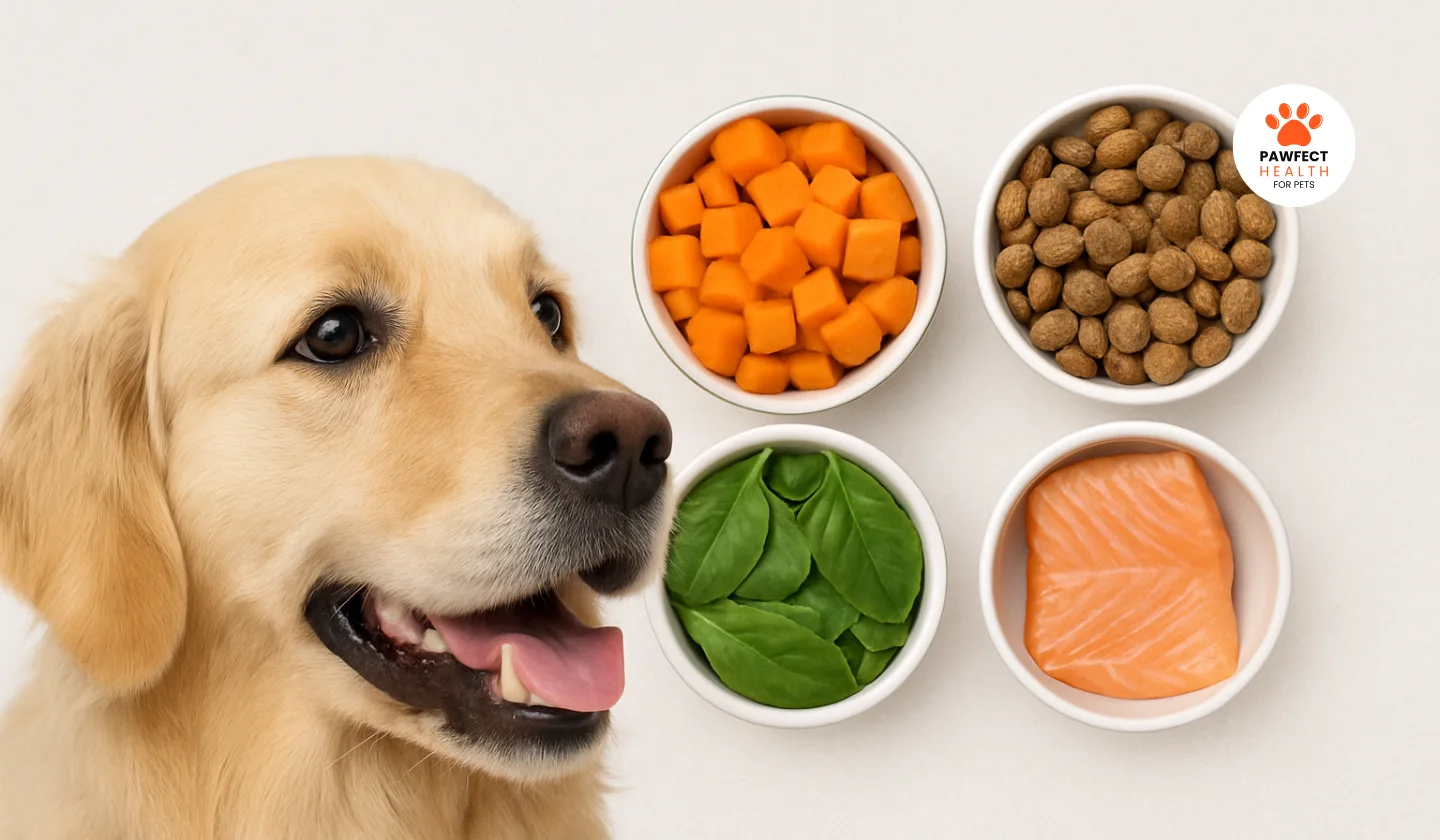
If you’ve heard turmeric can help dogs with sore joints or digestion, you’re not wrong. It’s been around for ages and is now popping up in pet care too. But when you start looking into it, you’ll find all sorts of options: powder, paste, chews and it gets confusing fast.
So how do you know which one is right for your dog? That’s what we’re here to figure out without all the fluff.
Just a Few Quick Things to Keep in Mind, It’s important to take what
- It can help with joint support, digestion, and overall health and wellbeing.
- It will largely remain in three forms such as powdered form, golden paste form, or soft chews.
- Powder is less expensive, paste is strong, and chews are most convenient.
- What you need depends on your dog (and your patience levels as well).
- Before starting anything new, always consult your vet.
Why Giving Turmeric the Right Way Matters
Not all turmeric works the same. The key ingredient is curcumin, the thing that does the heavy lifting but it doesn’t absorb well in dogs (or humans) unless it’s mixed with some fat and black pepper. That means the form you choose can make a real difference. However, curcumin has very poor bioavailability, it means the body struggles to absorb it effectively. Research highlighted by the National Center for Biotechnology Information (NCBI) suggests that curcumin is rapidly metabolised as well eliminated unless it is mixed with the right ingredients.
This is why black pepper plays such a crucial role. It contains piperine, a natural compound that significantly increases curcumin absorption by reducing its breakdown in the digestive system. According to Healthline, combining turmeric with black pepper and a source of fat can dramatically improve how much curcumin the body can actually use. Without this combination, turmeric may pass through the system with little to no real benefit.
Turmeric Powder: Basic but Tricky
This is what most people start with because it’s easy to find and cheap. But here’s the catch: applying turmeric powder directly from the powder container might not work that well.
If you want the benefits of it, you have to mix it with something like coconut oil and a little black pepper. Otherwise, it won’t absorb at all.
Why people try it:
- It’s everywhere and doesn’t cost much
- You can measure it yourself
- Easy to mix into food (if your dog isn’t fussy)
Why it might not work:
- Needs proper prep or it’s pointless
- Dogs might not like the taste or smell
- Quality differs a lot by brand
Golden Paste: A bit of work, lots of benefit
“Golden paste” is simply turmeric powder combined with water and oil and black pepper. This allows the dog’s body to better utilize the turmeric powder’s active ingredient, curcumin. It can be purchased through a pet store or made in your home in 10 minutes.
Why it’s worth it:
- It actually works when done right
- You can adjust it for your dog’s size
- Home-made means you know what’s in it
Why it’s not for everyone:
- You’ll need to keep it in the fridge
- Can be a little messy
- Some dogs might be picky about the texture
Which One Should You Choose?
In this case, there is no right or wrong answer. “If you’re just not fussy about your dog’s diet and are willing to put in a little work in the kitchen,” continues AnimalPlanet.com, “the paste is definitely the way to go. “If you’re looking for something quick and easy,” it adds, “chews are the way to go,” though you’ll have to check ingredients. “If you’re looking for something very inexpensive,” it suggests, “powder is the answer,” though you’ll have to mix it just right.”
See how this works with your dog, and you can begin with small steps. And, as usual, a natter with your vet is required.
Conclusion
While it is no miracle drug for all canines, it may make a difference for a few. It is regardless of whether you choose powder form, paste form, or chews. Consistency and what is most important is finding what works for you and your dog.
Frequently Asked Questions (FAQs)
Can I just sprinkle turmeric on my dog’s dinner?
Sure, but it’s not very effective unless you mix it with oil and black pepper. Otherwise, most of it just passes through.
Can turmeric paste be given on a daily basis?
Yes, if it’s the right dosage for the size of your dog. Start small and monitor their symptoms.
What about turmeric chews? Are they safe long term?
Usually, yes. Just make sure they don’t contain junk fillers and follow the dose on the label.
Paste or chews: which is better?
Paste is more effective for absorption. But if your dog spits it out or refuses it, a chew is still better than nothing.
Could turmeric upset my dog’s stomach?
Sometimes. It’s rare, but it happens if you start with too much. Go slow.
Is making paste hard?
Not at all. You need turmeric, water, oil, and pepper. Simmer it for a few minutes and store it in the fridge.
How long until I can expect results?
Some puppies may start responding within a few days. Others may take a few weeks.